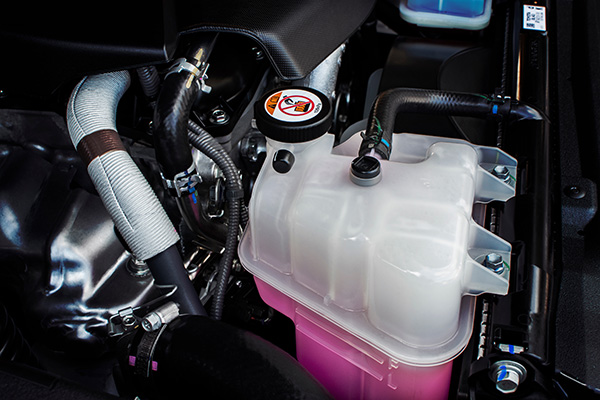
Coolant is one of those fluids most drivers never think about until something feels off. Maybe the reservoir line looks a little lower than you remember, or you get a low coolant message that disappears after you top it off once.
The big question is whether this is normal aging or a sign that something is leaking or burning off. A small drop can happen, but coolant is not supposed to vanish like windshield washer fluid, so it is worth knowing where the line is between normal and not normal.
What Coolant Does And Why The System Should Stay Full
Coolant carries heat away from the engine, protects against freezing, and helps prevent corrosion inside the cooling system. It also relies on pressure to work correctly. The cooling system is designed to be sealed, meaning coolant should circulate, heat up, cool down, and return to the same level without needing regular top-offs.
If the level is dropping repeatedly, the system is losing coolant somewhere. It might be a slow external leak, a cap that is not holding pressure, or an internal issue. The reason it matters is that low coolant can create hot spots and air pockets, and those can lead to overheating or poor heater performance.
When A Small Level Change Can Be Normal
There are a couple of situations where a small change is not immediately alarming. Coolant expands when hot and contracts when cold, so the reservoir level can look different depending on temperature. That is why the markings on the bottle usually reference the cold level.
It is also normal for a vehicle to settle after a cooling system service. After a flush, radiator replacement, or hose repair, a small amount of trapped air can work its way out over the next few heat cycles, and the reservoir level may drop slightly once. If it stabilizes after that, it may have just been purging air.
When Coolant Disappearing Is Not Normal
If you are adding coolant more than once, or the reservoir drops noticeably every week or two, that is not normal. Even small leaks add up because the system runs pressurized, and tiny seepage points can lose coolant only when the engine is hot, then dry before you spot a puddle.
Another not-normal sign is any coolant smell after driving. Coolant has a sweet odor, and if you smell it regularly, the system is likely venting or leaking. A heater that goes cool at idle, temperature fluctuations, or a fan that seems to run more than usual can also indicate that coolant is low or that air pockets are forming.
Common External Leaks That Hide In Plain Sight
A lot of coolant leaks are not obvious because they do not drip straight to the ground. They can land on shields, get blown backward, or evaporate off hot engine parts. Here are common places we check first:
- Radiator end tanks and seams, especially as plastic ages and starts to seep
- Upper and lower radiator hoses, including clamp areas that loosen over time
- Thermostat housing and related gaskets are common on many modern engines
- Water pump seepage usually leaves residue rather than a large puddle
- Heater hoses and connections near the firewall
- Radiator cap or expansion tank cap, if it is not holding pressure as designed
If you only see residue and never see a puddle, that does not mean there is no leak. It often means the leak is happening under pressure and heat, which is when it is hardest to catch by eye.
Internal Coolant Loss: When It Goes Somewhere You Cannot See
Coolant can also be lost internally. That can happen when coolant enters the combustion process or mixes with engine oil. These issues are less common than simple external leaks, but they are important to catch early.
Clues can include white exhaust smoke after warm-up, recurring overheating, a sweet exhaust smell, or persistent coolant loss with no external signs. Another clue is a milky look on the oil cap or dipstick, though that can also be caused by short-trip condensation, so it needs context. The point is, if coolant is disappearing and you cannot find a leak, testing becomes more important than guessing.
Owner Mistakes That Make Coolant Problems Worse
A big mistake is repeatedly topping off with plain water. Water can help in an emergency, but repeated top-offs dilute the coolant mix and reduce corrosion protection. Another mistake is mixing coolant types without knowing what is already in the system. Some formulas do not blend well and can cause buildup that restricts flow.
It is also risky to ignore a low coolant warning because the car still drives fine. Many engines can run near normal for a while with slightly low coolant levels, then suddenly run hot in traffic or during a long drive. That is where headaches start, because overheating can cause expensive damage fast.
How We Confirm Where The Coolant Is Going
The most effective first step is a pressure test, which puts the system under pressure without needing the engine to be hot. That makes slow leaks show themselves. We also inspect for residue trails, check the cap’s ability to hold pressure, and look at hoses and housings for seepage.
If external leaks are not obvious, we can check for signs of internal loss using additional tests based on the symptoms. The goal is simple: confirm the source, then repair what is actually failing. Coolant leaks can be straightforward, but only if you stop guessing and locate the real path.
Get Cooling System Service in Columbus, GA with Auto Masters Repair
We can pressure-test your cooling system, pinpoint hidden leaks, and confirm whether coolant loss is coming from a hose, the radiator, the water pump, or another component. We’ll also check pressure control and coolant condition so the repair holds up long-term.
Call Auto Masters Repair in Columbus, GA, to schedule a cooling system inspection and prevent coolant loss before it becomes an overheating problem.