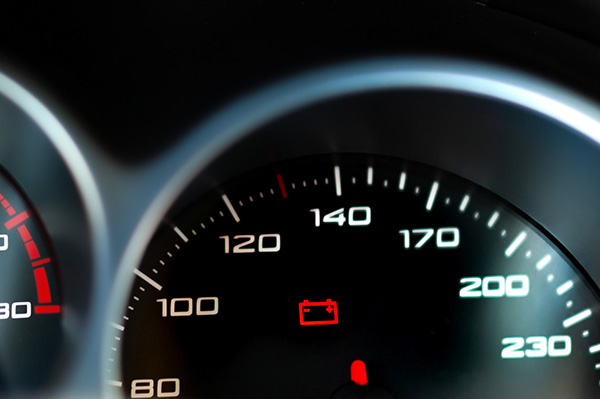
A battery warning light does not always indicate a bad battery. That is the part that catches people off guard. The light may have a little battery symbol on it, but it is really warning you about the charging system.
In plain terms, the car is saying the electrical system isn't being supplied as it should be.
Sometimes the battery is weak. Sometimes the alternator is not charging. Sometimes the real problem is a belt, cable, fuse, ground, or connection that is not doing its job.
What The Battery Warning Light Means
The battery starts the vehicle and supplies power when the engine is off. Once the engine is running, the alternator takes over most of the electrical work and recharges the battery. If the system voltage drops too low, the warning light turns on.
That light may appear when you first turn the key or press the start button, then go away after the engine starts. That is normal. If it stays on while driving, flickers at idle, or comes on with dim lights or strange electrical behavior, something needs attention.
The car may keep running for a while with the light on, but it may be running mostly on battery power. Once that battery drains, the vehicle can stall and may not restart.
When The Battery Is The Problem
A weak battery often shows up before the warning light becomes a constant issue. Slow cranking, clicking when you try to start, dim interior lights, or a vehicle that needs a jump more than once are all clues. Heat, age, short trips, and repeated deep discharges can wear a battery down.
A battery can also have enough power to start the vehicle one day and struggle the next. That happens when internal capacity is low. It may take a charge for a short time, but it cannot hold that charge well.
We usually test the battery under load rather than relying on age alone. A voltage reading helps, but a load test shows whether the battery can actually deliver power when the car needs it.
When The Alternator Is The Problem
The alternator keeps the electrical system alive while you drive. If it loses output, the battery starts carrying the vehicle, even though it was not designed to run everything for long. Headlights, the blower motor, heated seats, radio, fuel pump, ignition system, and computers all need steady power.
A failing alternator may cause dim headlights, flickering dashboard lights, warning lights that come and go, or electrical accessories that act weakly. The vehicle might start fine because the battery still has some charge, but the battery warning light comes on while driving.
That pattern points more toward charging trouble than a simple dead battery. If the alternator is not recharging the battery, a new battery will only buy a little time before the same problem returns.
Belts And Connections Matter Too
The alternator has to be spun by the belt. If the belt is loose, cracked, slipping, or contaminated with oil, the alternator may not charge correctly. A bad tensioner can create the same problem because the belt cannot keep enough grip.
Connections are just as important. Corroded battery terminals, loose cables, weak grounds, blown fusible links, or damaged wiring can block power even if the battery and alternator are both good. This is where electrical problems get annoying. The expensive part may not be the failed part.
A simple visual inspection can catch obvious corrosion, loose terminals, belt wear, and damaged cables before deeper testing starts.
Clues You Can Notice Before The Car Dies
A charging system problem often leaves a trail. The trick is not brushing it off as a random glitch.
Watch for these patterns:
- The battery light flickers at idle, then goes away when driving
- The lights dim when the fan, A/C, or rear defroster is on
- The car starts after a jump, but dies again later
- Multiple warning lights appear at once
- The engine stalls after the battery light has been on for a while
- There is a squeal from the belt area during startup or acceleration
These details help a technician decide where to test first. They also tell you the problem is past the point of waiting for the next free weekend.
Why Testing Beats Replacing Parts
Guessing gets expensive with charging systems. A weak battery can make the alternator work harder. A failing alternator can ruin a good battery by repeatedly draining it. A bad cable can make both parts look suspicious.
That is why a proper test checks the full system. Our technicians test battery condition, alternator output, voltage drop, belt condition, terminal condition, and grounds. Regular maintenance also helps because weak batteries, corrosion, and belt wear are easier to deal with before the warning light comes on.
Once the charging system is tested correctly, the repair is usually much clearer. Maybe it needs a battery. Maybe it needs an alternator. It may only need a connection cleaned and tightened.
Get Battery Warning Light Service In Columbus, GA, With Auto Masters Repair
If your battery warning light is on, flickering, or showing up with slow starts or dim lights, Auto Masters Repair in Columbus, GA, can test the battery, alternator, belt, and connections to find the real cause.
Schedule a visit before the vehicle drains the battery and leaves you stuck with a no-start.