Vehicle lights are easy to forget about because most of them work without drawing attention to themselves. You may notice a headlight that burns out, but a failed brake light, license plate light, side marker, or interior lamp can go unnoticed for quite a while.
A good habit is to check your exterior lights every one to three months and have them looked over during regular maintenance. Interior lights can be checked at the same time. It is also smart to inspect the lighting system before a long trip, after electrical work, or anytime you notice flickering, dimming, or a warning message on the dashboard.
Why Exterior Lights Deserve Regular Checks
Exterior lights do much more than help you see at night. They also let other drivers know when you are braking, turning, reversing, or simply sharing the road with them. Because of that, even one failed lamp can create a safety concern.
The problem is that many exterior lights are difficult to check from the driver’s seat. Brake lights are a perfect example. You can drive for days without realizing one has stopped working unless another person tells you or the vehicle happens to monitor that circuit.
Which Exterior Lights Should Be Checked?
A complete light check should go beyond the headlights. Every lamp that helps with visibility or communication should be included.
- Low-beam and high-beam headlights
- Brake lights
- Turn signals
- Tail lights
- Parking lights
- Reverse lights
- Side marker lights
- Fog lights when equipped
- Daytime running lights
- License plate lights
The lenses deserve attention too. A bulb can still be working while a cloudy, cracked, or moisture-filled lens reduces the amount of light reaching the road.
Brake Lights Are Easy to Miss
Brake lights often fail without giving the driver an obvious clue. Some newer vehicles display a warning when a bulb or LED section stops working, but not every vehicle monitors every lamp.
You can check brake lights with help from another person or by backing toward a garage door or reflective surface. If all of the brake lights stop working at once, the issue may involve a fuse, brake pedal switch, wiring problem, or control module rather than several bulbs failing together.
Interior Lights Can Point to Electrical Problems
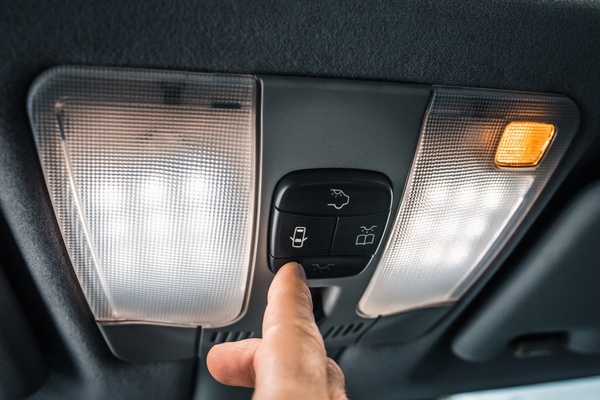
Interior lighting includes dome lights, map lights, cargo lamps, glove box lights, vanity lights, and illumination around certain controls. These are mostly convenience features, but unusual behavior can sometimes reveal a larger electrical issue.
For example, a dome light that stays on after the doors are closed can drain the battery overnight. A faulty door latch switch, hatch switch, or control module input may be responsible. A cargo light that remains on inside a closed trunk can cause the same problem without being obvious from outside the vehicle.
When Flickering or Dimming Means More Than a Bad Bulb
One dim light usually points toward that particular bulb, socket, connection, or ground. When several lights become dim or flicker at the same time, the problem may be somewhere else in the electrical system.
Headlights that change brightness with engine speed, interior lights that pulse at idle, or several lamps flickering together can be signs of a weak battery connection, charging system problem, poor electrical ground, or excessive resistance in a circuit. These symptoms are worth checking before they turn into a starting or charging problem.
LED Lights Can Fail Differently
Many newer vehicles use LED lighting instead of traditional replaceable bulbs. LEDs often last much longer, but they are not immune to failure. A section of the lamp may go dark, flicker, or operate intermittently.
On some vehicles, the LED is built into the complete headlamp or tail lamp assembly. That means the repair may involve more than replacing a simple bulb. Wiring, control modules, connectors, and the lamp assembly itself may all need to be tested before the correct repair is clear.
Moisture Inside the Light Housing Should Be Checked
A small amount of temporary condensation can sometimes appear after a large temperature change, but standing water or repeated heavy moisture inside a lamp assembly is different. That usually means the housing, seal, or rear cover is allowing water to enter.
Moisture can corrode bulb sockets, electrical terminals, and LED electronics. It can also damage reflectors and reduce light output. Replacing a bulb without fixing the water entry point may only lead to another failure later.
When Should You Have the Lighting System Professionally Inspected?
A professional inspection makes sense when the same bulb keeps failing, several lights stop working together, a fuse repeatedly blows, or a dashboard warning remains on after the bulb has been replaced. These problems usually need electrical testing rather than another round of parts replacement.
Technicians can check power, ground circuits, sockets, switches, fuses, wiring, control modules, and charging voltage. They can also check headlight aim if the beams seem too high, too low, or uneven after collision repairs, suspension work, or lamp replacement.
Make Light Checks Part of Regular Maintenance
Lighting checks do not take long, which makes them easy to include with regular maintenance. A quick inspection every few months can catch problems before they become inconvenient or unsafe.
It is especially useful before a long road trip or during seasons when you drive more often in darkness, rain, or poor visibility. The earlier a failing light or electrical connection is found, the easier it usually is to deal with.
Get Vehicle Light Inspection in Columbus, GA, With Auto Masters Repair
Auto Masters Repair in Columbus, GA, can check headlights, brake lights, turn signals, interior lights, sockets, wiring, and related electrical components.
If a light is flickering, staying on when it should not, repeatedly burning out, or simply has not been checked in a while, contact us to schedule service.